


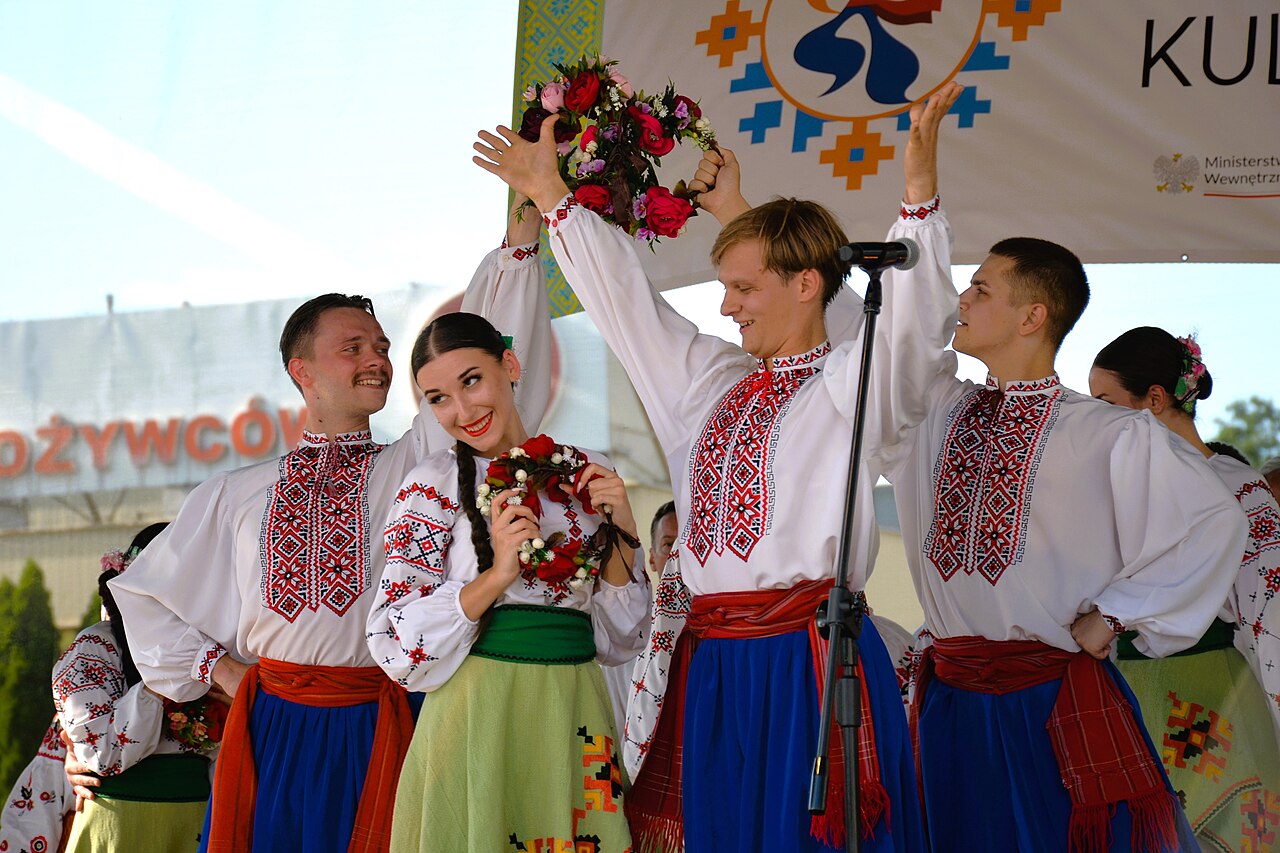
Through interviews conducted in Greenland and Ukraine, the project examines the role of language and culture when a country or a people is subjected to extreme circumstances. It focuses on two cases situated in very different contexts: Greenland is facing growing geopolitical pressure, while Ukraine has been under attack for four years in a devastating war of aggression waged by Russia, resulting in immense loss of life. Despite these fundamental differences, the two cases share a common core. Language and culture are not simply things to be restored as part of post-war recovery; they are fundamental to a country’s ability to defend itself effectively, maintain social cohesion, and assert its right to self-determination. This is precisely why an aggressor will go to great lengths to undermine them.
In Greenland, the issue is one of narrative sovereignty as an integral part of the right to self-determination: the ability to tell one’s own stories, in one’s own language and on the basis of one’s own norms, values, and traditional ways of life. These have been undermined by colonial oppression and are now being further challenged by the geopolitical interests and growing ambitions of major powers. In Ukraine, the issue is the urgent defence of national survival, a struggle that is also being waged through language, memory, institutions, and cultural continuity. In both cases, culture is not merely an expression of identity but an essential part of the political struggle.
By studying these two cases, the project seeks to generate knowledge about cultural resilience under very different forms of external pressure. Understanding what Sweden can learn from these experiences is of vital importance to the country’s defence capabilities.
The project’s hypothesis is that, even in peacetime, a country must recognise the importance of protecting and fostering a vibrant culture—including when that culture creates friction, challenges prevailing assumptions, and gives rise to conflict. It is not enough simply to safeguard cultural heritage and a cultural canon on paper. A democratic society must also protect the languages, narratives, and forms of cultural expression that keep public debate alive, while continuing to develop them in times of geopolitical tension and threat. Ultimately, this strengthens society’s resilience and its capacity for defence.


