


New research initiative on corruption and environmental crime
Corruption is widely recognised as an obstacle to effective and sustainable environmental governance. Yet, there is still insufficient research on how different types of institutions may, in different ways, enable corruption and harmful practices without these necessarily constituting violations of the law. This knowledge gap will now be addressed by a team of 15 researchers from various disciplines, made possible through a SEK 40 million grant from the independent research funder Mistra.
MISTRA CLEAN is a four-year, interdisciplinary research programme that will be hosted by the Institute for Futures Studies (IFFS). The programme will be led by Programme Director Andreas Duit, Professor of Political Science at the Institute for Futures Studies, and Deputy Programme Director Sverker Jagers, Professor of Political Science at the University of Gothenburg.
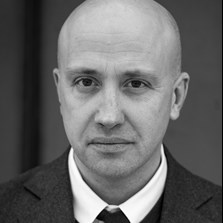 – My entire research team and I are, of course, very pleased that our programme has been awarded funding. For us, this represents a unique opportunity to take on a large but important research challenge, and we look forward to starting the work as soon as possible. We are convinced that the programme will generate new knowledge about a difficult-to-study problem, and we also hope to develop practical solutions, says Andreas Duit, Programme Director of MISTRA CLEAN.
The programme will analyse how institutional shortcomings—in the form of regulatory capture, corruption, and environmental crime—undermine Swedish environmental governance and negatively affect the natural environment. MISTRA CLEAN moves beyond a narrow legal definition and examines the full spectrum, from formally legal but harmful influence to outright criminal activity, as well as how these phenomena interact.
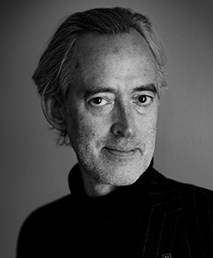 – When I learned about Mistra’s initiative, I brought together some of the leading researchers in political science research on corruption, criminology, and environmental political science, as well as legal scholars, environmental economists, and political theorists—including myself. This interdisciplinary approach enables MISTRA CLEAN to go beyond traditional legal definitions and to study the entire range from outright crime to harmful influence, as well as the crucial issue of institutional design to counteract such harmful activities. Mistra’s substantial support makes it possible for the institute to generate new knowledge about a complex and difficult-to-study problem area of great importance for sustainable development, says Gustaf Arrhenius, Professor of Practical Philosophy and CEO of the Institute for Futures Studies.
The programme has four main objectives:
(1) to conduct the first comprehensive mapping of regulatory capture, corruption, and crime in Swedish environmental governance;
(2) to carry out empirical studies of the causes and consequences of institutional shortcomings, including international comparisons;
(3) to develop diagnostic tools (survey-based and AI-assisted) to identify vulnerabilities and strengthen resilience in public and private organisations; and
(4) to build capacity through PhD and postdoctoral positions as well as interdisciplinary courses.
MISTRA CLEAN consists of six work packages: national mapping (WP1); analysis of vulnerabilities and corruption risks (WP2); register-based and legal studies of environmental crime (WP3); environmental impacts of institutional shortcomings (WP4); development of AI-based diagnostic tools to detect and address corruption risks within organisations (WP5); and outreach and capacity-building activities (WP6), including annual policy days, policy briefs, and co-production with practitioners. Expected outcomes include scientific publications, new datasets, diagnostic tools and organisational guidelines, as well as strengthened trust in Swedish environmental protection institutions.
The programme will be carried out in collaboration between several leading Swedish higher education institutions. In addition to IFFS, participating partners include the Quality of Government Institute (QoG) and the Centre for Environmental Political Studies (CEPS) at the University of Gothenburg, as well as Södertörn University. Together, the consortium brings together expertise in political science, law, criminology, and environmental economics. MISTRA CLEAN is also embedded in strong international research networks, such as Environmental Politics and Governance (EPG), Environment for Development (EfD), and the Interdisciplinary Corruption Research Network, providing international anchoring and collaboration.
FACTS
MISTRA CLEAN A Research Programme on Capture, Corruption, and Crime in Environmental Governance
Host: The Institute for Futures Studies
Programme Director: Andreas Duit, Professor of Political Science at the Institute for Futures Studies
Deputy Programme Director Sverker Jagers, Professor of Political Science at the University of Gothenburg
Duration: 4 years
Other project members at IFFS: Gustaf Arrhenius, Ludvig Beckman, Amber Beckley, Amir Rostami, Bo Rothstein


