


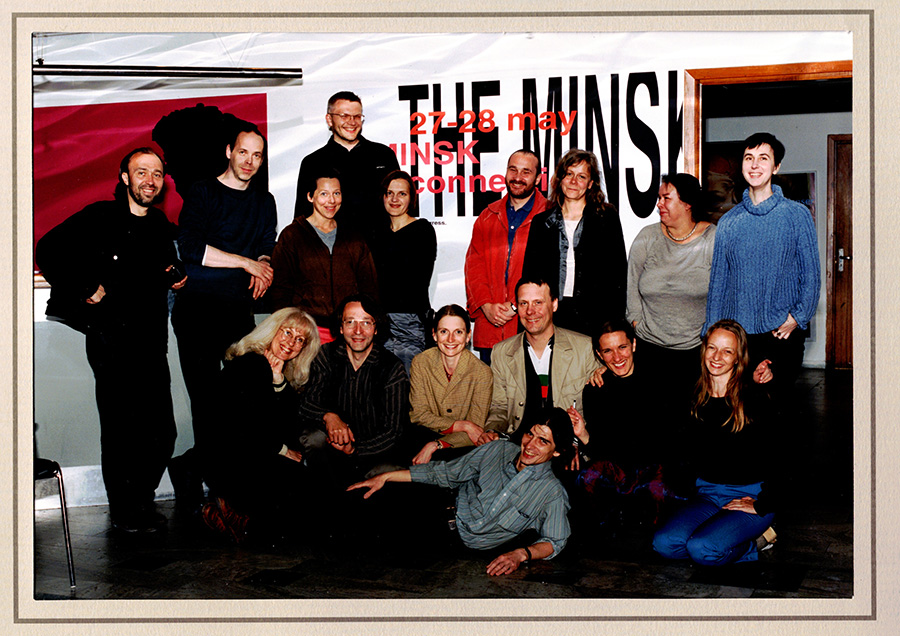
Over the past twenty-five years, the initial optimism surrounding digital networks as catalysts for democracy and cultural exchange has increasingly been supplanted by concerns over disinformation and repression. Situating itself within this historical shift, this project examines how contemporary artistic practices respond to these evolving socio-political dynamics.
The research project is based on "Money – a Commentary on the New Economy" (2001), an art project funded by the Swedish Institute. It was the culmination of an initiative in which young self-organized artists in Scandinavia and the former Soviet Union networked in the name of democracy, hoping for new markets for Swedish values. The artworks foreshadowed the transformation we see today 25 years later, when digital networks are no longer associated with freedom of expression but with disinformation and repression.
This project aims to trace this development and collectively explore art as an organization of vulnerability. Through the participants' survival strategies and life philosophies, we address the role of art in society. We analyze participants' micro-narratives and reflect on how these are connected to larger societal transformations. The project is based on an extensive network of artists from Sweden, Finland, Ukraine, Belarus, Lithuania, Latvia, Northern Moldova, Georgia, and Russia, with whom we look back to better understand the future. The project wants to organize a common “self” through the participants’ individual stories, inspired by Svetlana Alexievich and Frigga Haug’s collective memory work. The work is developed and embodied in a theatrical performance that functions as a commonplace, a space to build our humanity: our self-organization.
Picture from seminar at Teatar Replica in May, 2000. Photo: Ingvar Larsson


